Free Fire in 2026: Why Mobile Esports Is Expanding Global Tournaments and Creating Separate Formats
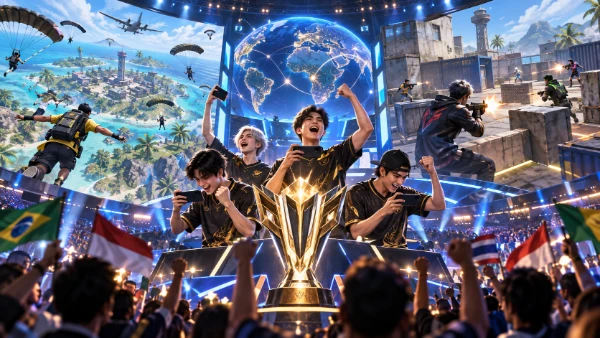
Free Fire entered 2026 with a competitive calendar that says a great deal about the direction of mobile esports. Garena increased the size of its leading international competition, brought more regions into qualification, continued Free Fire’s place at the Esports World Cup and established a separate competitive route for Clash Squad. These changes are more than additions to an already busy schedule. They show how a mobile game can support several types of professional competition without forcing every team, market and viewer into the same tournament structure. Free Fire still has Battle Royale at the centre of its esports identity, but the competitive scene now stretches from national qualifiers to regional leagues, specialist Clash Squad events and 24-team international tournaments. The 2026 season therefore provides a useful example of how mobile esports can grow geographically while also giving different styles of play room to develop on their own.
Free Fire’s 2026 Calendar Is Built Around a Bigger World Stage
The clearest change in 2026 is the expansion of the Free Fire World Series Global Finals field. Garena announced that its leading global event would grow from 18 to 24 participating teams, giving a larger number of regions access to the highest level of Free Fire competition. The Global Finals are scheduled to begin on 6 November in Bangkok, with the international programme running across four important weekends during the month. Increasing the number of places matters because the competitive scene is no longer concentrated around only a handful of established markets. Southeast Asia and Brazil remain major centres of professional Free Fire, but teams from Latin America, South Asia, the Middle East, Africa and other developing scenes now have stronger reasons to build long-term rosters when there is a visible route towards an international event. A larger final also reduces the risk that world competition becomes a repeated contest between almost the same group of organisations every season.
Regional competition remains the foundation beneath those international events. FFWS Southeast Asia 2026 illustrates the scale of that structure particularly well. The Spring season began on 24 April with 18 teams from Thailand, Vietnam, Indonesia and Malaysia and concluded with offline finals in Ho Chi Minh City at the end of May. The Fall season then started on 14 August with another 18-team field and is due to finish with its Grand Finals in Surabaya, Indonesia, on 19 and 20 September. This means leading Southeast Asian organisations are not preparing for a single short qualifying weekend. They have months of competitive matches in which form, roster decisions and tactical development can be tested before the global season reaches its final stage. For viewers, this also creates a recognisable regional narrative: teams can be followed through domestic and regional competition before they appear against opponents from other parts of the world.
The 2026 calendar also connects Free Fire to a broader international esports schedule. The game’s Esports World Cup tournament took place from 15 to 18 July after the event moved to Paris. Twenty-four teams competed, and Latin American side LYON won the title, the $300,000 first prize and direct qualification for the FFWS Global Finals. That result was significant beyond the trophy itself. LYON defeated a field containing leading representatives from several established Free Fire regions, while AG.AL finished second and LOUD third. Benjamín “Gamezking” Pérez was named MVP after an event in which LYON also produced a record 45-point game. The outcome gave the 2026 season an immediate example of why a wider international field can matter: a Latin American team did not simply receive another place at a major event but converted that opportunity into one of the year’s most important Free Fire titles.
From Regional Qualifiers to a 24-Team Global Field
A credible global championship needs more than a larger number beside the team count. It needs qualification routes that allow strong teams from different markets to reach that field through competition. Free Fire’s 2026 structure moved further in this direction. Southeast Asia supplied a substantial group of teams to the Esports World Cup through FFWS SEA Spring, while other routes covered Brazil, Latin America, Bangladesh, Pakistan, Nepal, the Middle East and North Africa, the United States, Africa and India. The exact number of available places differs between regions because their competitive structures and established player bases are not identical, but the principle is clear: international participation increasingly depends on a network of regional results rather than a small collection of direct invitations. That gives local competitions practical value because a national or regional match can become the first stage of a journey that eventually reaches the year’s largest events.
Garena has also continued to use open and national qualifying stages in some markets. Thailand’s 2026 Spring route, for example, began with an Open Qualifier in January before moving to an 18-team Knockout Stage and a Final Stage in February. The winner earned the opportunity to continue into FFWS SEA Spring, where places at international events could then be secured. A structure like this is particularly important in mobile esports because the potential player pool is much broader than the group already contracted by professional organisations. Free Fire is designed for smartphones and remains accessible on a wide range of devices, so talented players can emerge outside the traditional esports centres that are usually associated with expensive gaming equipment. Open qualification does not guarantee that an unknown squad will reach the world championship, but it keeps the route visible and gives aspiring competitors a measurable series of steps rather than an abstract promise of professional play.
This approach also changes what “global” means in practical terms. Adding countries to a tournament graphic has limited value if those teams disappear after one appearance and have no regular competition at home. Regional leagues and qualifiers create the repetition needed for a competitive scene to become sustainable. Players need regular opponents, organisations need a reason to maintain rosters, coaches need enough matches to evaluate progress, and supporters need events they can follow between major international finals. Free Fire’s 2026 calendar addresses these needs by linking several levels of competition rather than treating the world championship as an isolated event. The 24-team Global Finals can therefore be understood as the visible end of a much longer process. Its importance comes not just from having more teams in Bangkok, but from the fact that those teams can arrive through competitive systems connected to their own regions.
Why Separate Formats Matter for Mobile Esports
Expansion in 2026 is not limited to geography. Garena has also separated different kinds of Free Fire competition more clearly, especially through the development of standalone Clash Squad tournaments. This is important because Battle Royale and Clash Squad use the same game but ask teams to solve very different problems. Battle Royale places several squads into a large map, where survival, movement, positioning, eliminations and changing safe zones all influence the result. Clash Squad is a direct four-versus-four format built around rounds and repeated engagements between two teams. A roster that performs well across long Battle Royale matches is not automatically the best roster for short, concentrated Clash Squad fights. Giving the second mode its own competition therefore allows a different kind of skill to have competitive value instead of treating Clash Squad as a side activity within the main Battle Royale calendar.
The difference is easy for spectators to recognise without needing an advanced understanding of esports strategy. In Battle Royale, a team can make a smart decision by avoiding an unnecessary fight, moving early towards a stronger position or protecting enough players to score well later in the match. Success is often cumulative: one good game helps, but consistency across a series is usually essential. Clash Squad removes much of that uncertainty. Two teams know exactly who they are facing, rounds are comparatively compact, and the outcome depends more heavily on direct execution, coordination and adaptation to the opponent. That produces a different viewing rhythm. Battle Royale creates tension through survival among many squads; Clash Squad creates it through repeated head-to-head confrontations. Keeping both formats available gives Free Fire organisers more freedom to build events around different audiences and competitive strengths.
There is also a practical reason not to force every game mode into one championship. A tournament becomes difficult to understand when teams earn points through several unrelated forms of play and viewers need complicated rules to know what each match means. Separate events can keep the competitive purpose clearer. FFWS remains strongly associated with Free Fire’s Battle Royale identity, while the Free Fire Clash Master competitions give Clash Squad its own qualification and championship route. This separation also lets tournament organisers adjust schedules, brackets and national qualification systems to the needs of each format. The result is not fragmentation for its own sake. It is closer to what happens in established sports when different disciplines require different competitive structures. The same player base can appreciate both, while teams can decide whether to specialise or maintain enough depth to compete across more than one type of event.
Clash Squad Gives Specialists a Competitive Route of Their Own
The standalone Clash Squad idea announced at the beginning of 2026 quickly became visible in actual regional competition. In Thailand, Free Fire Clash Master Thailand 2026 Summer was used to select two representatives for Free Fire Clash Master SEA 2026 Summer. Teams including Twisted Minds, All Gamers Global and Buriram United Esports took part in the Thai competition, while Indonesia ran its own qualifier for places at the Southeast Asian event. This is an important detail because it shows that the separate format was not merely an exhibition attached to a larger Battle Royale tournament. National results determined who would continue to regional Clash Squad competition. That creates a genuine competitive ladder and gives teams a reason to prepare specifically for the mode. Players who are particularly strong in direct four-versus-four encounters can now build competitive reputations around results that are meaningful on their own.
For professional teams, separate formats also create interesting roster questions. Battle Royale rewards communication across unpredictable situations: squads must assess other teams’ positions, manage resources, react to the safe zone and decide when a fight is worth taking. Clash Squad compresses many decisions into repeated short rounds in which opponents can study each other much more directly. A player whose strengths are rapid close-range engagements and immediate coordination may have more influence in Clash Squad than in a long Battle Royale match. Coaches can therefore evaluate players against a more specific set of demands instead of judging every competitor through one format. Over time, this can lead to specialists, distinctive team identities and rivalries that would be harder to establish if Clash Squad existed only as a small section of a broader tournament.
Separate competition is also useful for the audience because it changes the type of story an event can tell. A Battle Royale broadcast has to follow many squads at once, frequently moving between fights happening in different areas. That scale is part of the appeal, but it can be demanding for someone who does not already know the teams. Clash Squad narrows attention to two opponents and produces a simple question: who wins the series? This does not make one mode better than the other. It means Free Fire can offer different entry points into esports. A viewer who enjoys large tactical survival matches can follow FFWS, while someone who prefers direct team-versus-team confrontations can follow Clash Master events. For a mobile esport with audiences spread across numerous countries and languages, having more than one understandable competitive format can be more valuable than simply adding more matches to the same championship.
What Free Fire’s 2026 Strategy Says About Mobile Esports
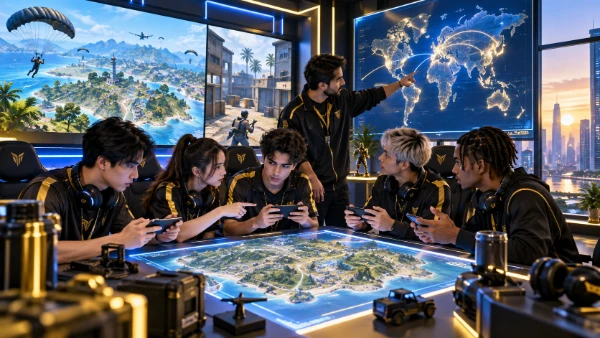
Free Fire’s expansion reflects a wider advantage of mobile esports: competitive games can reach markets where smartphones are much more common than dedicated gaming PCs or current-generation consoles. That does not mean professional mobile esports is inexpensive or simple at the highest level. Teams still need coaching, practice, reliable connections, travel support and organisational stability. The difference is at the entry point. A much larger number of players can become familiar with the same game before professional competition is even considered. Garena has repeatedly described Free Fire as a title designed to run across a broad range of smartphones, and the game’s long record of global downloads has given its esports organisers a large potential audience. The challenge in 2026 is turning that reach into competitive structures that can survive beyond individual star teams or short periods of popularity.
The season also demonstrates why international events work best when regional identity remains visible. LYON’s victory in Paris carried weight because the organisation represented a Latin American competitive scene facing recognised teams from Southeast Asia and Brazil. Buriram United Esports entered 2026 as the reigning FFWS world champion after winning the 2025 Global Finals in Jakarta, while Southeast Asian leagues continue to feature established organisations from Thailand, Indonesia, Vietnam and Malaysia. These regional stories make international competition easier to care about because supporters are not watching interchangeable rosters assembled only for one event. They are watching teams that have already built histories through local and regional matches. Increasing the Global Finals to 24 teams gives more of those stories a chance to reach Bangkok, but the long-term value will depend on whether newer regions can maintain meaningful competition between major events.
Another notable feature of Free Fire in 2026 is that growth is being tested through several tournament ideas rather than one universal model. February brought the first Free Fire Ramadan Cup, an online Battle Royale event with 18 teams from Bangladesh, Pakistan, Malaysia and Indonesia competing for a $25,000 prize pool. Its Grand Final used Champion Rush, a system in which reaching a points threshold is not enough on its own; an eligible team must subsequently secure a Booyah to take the championship. Champion Rush also appeared at the Esports World Cup, showing how Free Fire is willing to adjust the closing stages of tournaments to create a clear winning condition rather than relying exclusively on traditional accumulated standings. Combined with standalone Clash Squad events and larger global fields, this experimentation suggests that mobile esports growth is increasingly about choosing the right structure for each event, region and audience.
The Next Test Is Turning More Regions into Lasting Contenders
The strongest measure of Free Fire’s 2026 expansion will not be the number of tournament announcements. It will be what happens to the regions that now receive additional opportunities. An international place can produce an important breakthrough, as LYON demonstrated at the Esports World Cup, but sustainable competition requires more than one successful result. Teams need regular domestic or regional events, clear qualification rules and enough certainty to plan their seasons. Players also need a reason to remain together rather than rebuilding rosters after every major championship. The existing FFWS structure gives major Southeast Asian and Brazilian teams a relatively clear annual programme. The challenge is to strengthen comparable routes in newer or returning markets so that qualification for a global event becomes the result of an active competitive scene rather than an isolated tournament held shortly before the international final.
Competitive balance will matter as well. Expanding from 18 to 24 teams makes the Global Finals more representative, but larger fields are valuable only when the additional teams have a realistic chance to compete. The 2026 season has already provided evidence that established regional hierarchies are not permanent. LYON’s EWC victory put a Latin American roster ahead of teams from regions with deeper recent histories in Free Fire, while AG.AL’s runner-up finish demonstrated the continued strength of Southeast Asian competition. Results like these create stronger international events because qualification is no longer the main achievement; teams from different regions can reasonably aim for the title. If that competitive spread continues, a 24-team world event becomes more than an expansion of the schedule. It becomes a test of how well Free Fire’s regional systems are producing teams capable of challenging one another at the same level.
By September 2026, Free Fire has already shown several parts of that strategy in practice. The Esports World Cup has produced a Latin American champion, FFWS SEA has completed its Spring season and moved deep into the Fall calendar, Clash Master competitions have given Clash Squad a distinct regional path, and the enlarged FFWS Global Finals remain ahead in November. Taken together, these developments show why the year is important for mobile esports. Growth is no longer being treated simply as a matter of attracting more players or adding another international trophy. Free Fire is building more routes into professional competition, giving different game modes their own identity and widening the number of regions represented at major events. The lasting question is whether these routes can remain consistent from season to season. If they do, 2026 may be remembered less for one tournament result than for the point at which Free Fire’s competitive structure became noticeably broader, more international and more varied.