
Manchester United’s Late-Season Defensive Struggles: Key Factors Behind the Decline
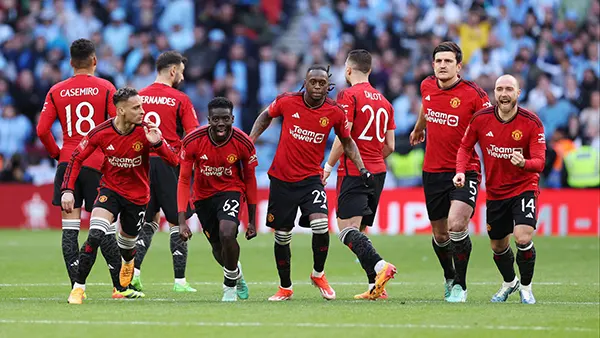
The second half of the 2024/2025 season has exposed a series of recurring defensive issues for Manchester United. Despite moments of progress, the team has been unable to build consistent stability at the back. This text explores the practical reasons behind the decline, focusing on tactical imbalance, individual reliability, squad structure, and injury-related complications that continue to shape the club’s performances.
Tactical Organisation and Structural Gaps
Manchester United’s defensive inconsistency has been heavily influenced by the team’s tactical structure. The high-press strategy introduced at the start of the season worked only in phases, often leaving wide channels and spaces between the lines when the press was broken. Opponents used these pockets effectively, especially during transitions, where United frequently lost control of midfield positioning.
Another notable issue involves the spacing between central defenders and full-backs. The team has struggled to maintain a compact shape, especially when full-backs push forward aggressively. As a result, turnovers regularly create situations where two or three defenders must deal with fast counter-attacks without sufficient midfield coverage.
Match analysis also shows inconsistent communication between defensive units. When switching from a high defensive line to a more conservative shape, United often lose momentary coherence. These lapses, though brief, have cost the team decisive goals in tight fixtures.
The Role of Midfield Balance in Defensive Instability
A significant share of the defensive problems stems from the lack of a stable midfield anchor. While some players have shown strong ball-progressing qualities, their defensive contribution has not provided the shielding required to protect the centre-backs. Without a reliable holding midfielder, opponents frequently pass through central areas with ease.
The midfield also suffers from inconsistent positioning during second-ball phases. Matches against possession-heavy teams reveal how quickly United lose control when the midfield line retreats too deep or fails to close down attackers entering the zone outside the penalty area. This area has been a repeated source of conceded shots.
Another concern is the mismatch between player profiles. The squad lacks a natural balance between aggressive pressers and disciplined stoppers. This makes coordinated defensive patterns difficult to sustain throughout a full 90 minutes, especially during periods of intense fixture congestion.
Impact of Injuries and Squad Rotation
The second half of the season has once again highlighted Manchester United’s vulnerability to injuries. Long-term absences of first-choice defenders and recurring short-term injuries across the back line have forced constant reshuffling. Such instability makes it difficult for any defence to develop cohesion or rhythm.
Several young players, though promising, have been thrust into high-pressure roles earlier than planned. This affects both timing and decision-making, especially against experienced Premier League forwards. While some matches have shown encouraging development, the inconsistency is evident.
Goalkeeper rotation has also influenced organisation during set pieces and open-play defensive transitions. When defenders adjust to different communication patterns and distribution styles, it takes time to rebuild collective understanding. This has been particularly noticeable in matches where United concede early goals.
Physical Load and Performance Variability
The fixture calendar in early 2025 has placed notable physical demand on the squad. Players returning from injury often require several matches before regaining full sharpness. During this adjustment period, defensive timing—tackles, aerial duels, and recovery runs—can fluctuate significantly.
Accumulated fatigue has also led to late-match lapses. United have conceded a considerable share of goals in the final 20 minutes of games, highlighting declining intensity and slower responses when defending quick combinations near the box.
The coaching staff have attempted various rotation strategies, but constant changes prevent the defensive four or five from developing familiarity. Stability in selection remains one of the key unresolved challenges heading into the final stage of the season.
Individual Errors and Declining Consistency
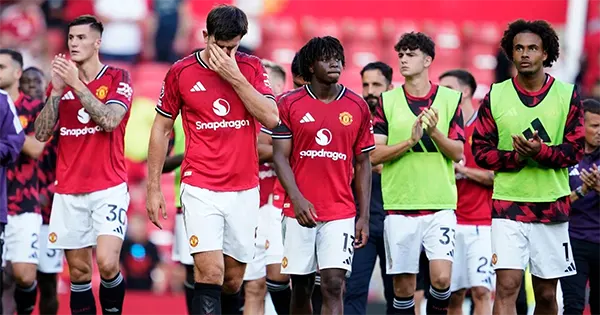
While systemic issues play a major role, individual mistakes have contributed strongly to the team’s defensive struggles. Poor decision-making in critical zones, misjudged aerial duels, and misplaced passes under pressure have directly led to goals in multiple matches.
Some defenders have suffered noticeable dips in form, often due to overplaying or prolonged recovery periods. These drops have made United vulnerable in high-stakes fixtures, where small errors often determine the result. The lack of an experienced, consistently available leader in the back line further compounds the problem.
Another important factor involves the distribution from the back. Under pressure, the team occasionally struggles to progress the ball safely, leading to turnovers in their own half. These transitions frequently catch the defence unprepared, especially when the midfield is positioned too high up the pitch.
The Psychological Component of Defensive Instability
The repeated pattern of conceding early or unnecessary goals has created psychological pressure on the defensive group. When confidence drops, defenders tend to take fewer risks in possession and become hesitant in one-on-one situations, which further encourages opponents to press aggressively.
In matches where the team concedes first, the defensive line often becomes overly cautious. This shift disrupts pressing triggers and deepens the overall block, inviting more pressure. The cycle continues as opponents exploit this passive approach, increasing the likelihood of additional mistakes.
Restoring confidence will require a combination of stable selection, clear tactical guidance, and visible leadership on the pitch. Without these elements, defensive inconsistency will remain a central challenge throughout the season.