Southpaw vs Orthodox: 7 Typical Scenarios and How They Show Up in Real Fights
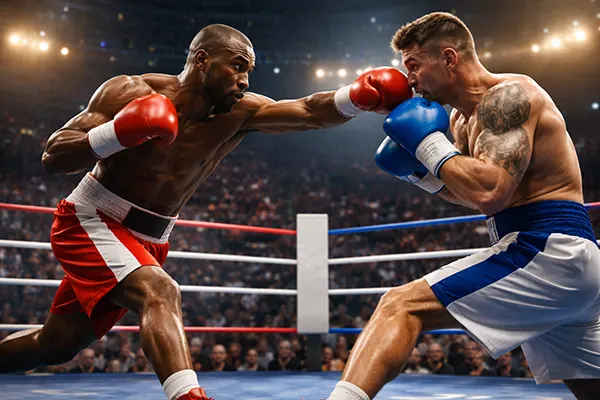
When a southpaw meets an orthodox boxer, the ring quietly changes shape. The centre line shifts, the jab lane flips, and both fighters have to solve a problem that doesn’t exist in same-stance match-ups: who owns the angle where clean shots land without paying for them. You’ll hear clichés about “awkward lefties”, but the truth is more practical. These bouts are decided by repeatable scenarios—foot position, lead-hand control, and the kind of counters that appear because the punches now travel on different rails.
Scenario cluster 1: Foot position, jab lanes, and the fight for the outside angle
The most common battle is the “outside lead foot” race. In orthodox vs southpaw, both lead feet aim for the same piece of floor, because that outside position opens a straight line for your rear hand while pushing your head off the opponent’s power line. In real time it looks like tiny shuffles, but it dictates who gets to punch first without being met by a clean counter.
Next comes the lead-hand fencing. Because both jabs come from the lead side but land on different targets, fighters start touching, pawing, pinning, and redirecting the opponent’s lead glove. It’s not showy, yet it decides whether the jab is a scoring shot or just a range finder that gets punished. A southpaw’s right jab can be a spear to the orthodox boxer’s chest and shoulder line; an orthodox jab often tries to split the guard and force the southpaw’s head back onto the centre line.
The third piece is the “jab line” itself—the corridor between lead shoulders. In same-stance fights, you can often jab to establish rhythm. In opposite-stance fights, jabbing carelessly is a fast way to walk onto the opponent’s rear hand. That’s why you’ll see more jabs to the body, more step-jabs, and more jabs thrown with head movement already built in, so the return fire has less time to find you.
Scenario cluster 2: Counters to the straight left, and why some punches suddenly become available
The straight left is the southpaw’s headline weapon, but it’s also a predictable lane—so the counters are well known. A disciplined orthodox boxer looks to slip outside the left hand and answer with the right cross or right uppercut, especially when the southpaw squares up after missing. Timing matters: the counter usually lands not “after the punch”, but as the southpaw’s weight transfers forward.
Orthodox fighters who struggle tend to over-focus on the left hook. Against a southpaw, the hook can be excellent—particularly the check hook when the southpaw steps in—yet it only works if the feet are in the right place. If your lead foot is trapped inside, the hook turns into a swing that exposes you to the straight left down the middle. When the feet are right, the hook becomes a steering wheel: it turns the southpaw and ruins the angle for the next left hand.
There’s also a quieter counter: taking away the southpaw’s rear hand by attacking the lead side. That can mean stiff jabs to the shoulder, stabbing the body to freeze the hips, or stepping slightly to your own right so the straight left has to travel across your guard instead of through it. The point isn’t to “avoid the left”; it’s to make the left arrive late, from too far away, or without the balance needed to follow up.
Scenario cluster 3: Rhythm traps—why some orthodox boxers look lost, while others take over
The “lost” look usually comes from broken timing rather than fear. Many orthodox fighters are used to the opponent moving in mirrored patterns; with a southpaw, the cues change. The jab comes from a different angle, the lead shoulder points differently, and the distance feels wrong by a few inches. That’s enough to make a boxer reach, and reaching is where opposite-stance fights punish you most.
Orthodox boxers who dominate do two things early: they set a repeatable exit and they control the pace of resets. Instead of admiring single shots, they punch and move to the same safe side again and again, forcing the southpaw to chase the angle rather than create it. When the southpaw has to “hunt” the outside position, their offence becomes more predictable—and predictability is what good counters feed on.
Feints become sharper in these match-ups. Because both fighters are nervous about the rear hand, a small shoulder twitch can draw a big reaction: a step, a guard shift, or a clinch. The better operator uses feints to make the other boxer move first, then claims the angle that was being contested. This is where you’ll see rounds decided by footwork and discipline rather than volume.
Scenario cluster 4: Clinches, head clashes, and the messy side of opposite stances
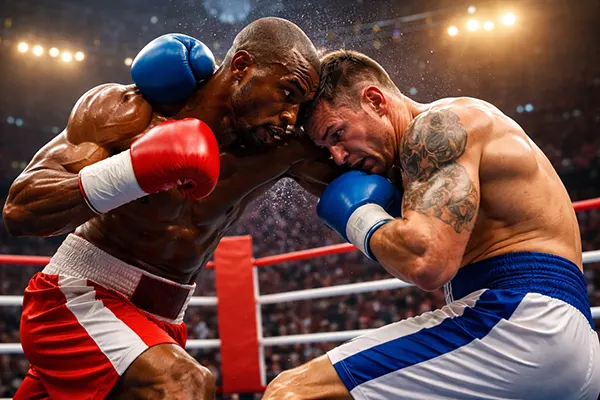
Opposite stances increase the chance of accidental head clashes because both fighters often move toward the same side to chase the outside angle. When heads bump, the bout can change instantly: cuts force tactical compromises, and fighters become hesitant to step in the same way. You’ll often notice more upright entries and more “touch first, then punch” sequences after an early clash.
Clinches rise for a simple reason: when the angle is lost, tying up is safer than exchanging on the centre line. A southpaw who’s been walked into the orthodox boxer’s right hand may grab to reset; an orthodox fighter who’s been lined up for the straight left may do the same. Watch for how referees handle it—some allow short inside work, others break quickly, and that influences whether body shots become a deciding factor.
Fouls are rarely planned, but patterns are real. Lead feet get stepped on, shoulders nudge, and forearms frame faces as fighters try to hold their line. The cleaner fighter is usually the one who wins the referee’s perception as well. In close rounds, warnings and point deductions can matter as much as punch stats—especially when the bout becomes a stop-start struggle for position.
Scenario cluster 5: Adjustments over rounds—stance switches, body work, and “solving” the puzzle
The best adjustments are boring on paper: jab to the body, touch the lead hand, step out after scoring, and refuse to trade when the feet are wrong. Body work is particularly valuable because it attacks the engine that drives angle changes. Slow the legs and the outside-foot battle becomes easier to win, which then makes the rear hand land cleaner.
Stance switching is often used as a pressure release rather than a full identity change. An orthodox boxer might momentarily switch southpaw to remove the opponent’s straight-left lane, or to create a new jab angle on the exit. Likewise, some southpaws will switch orthodox after throwing the left, so they don’t retreat in a straight line on the same track the opponent wants to counter.
The final adjustment is psychological: accepting that you may lose exchanges to win the geometry. Fighters who insist on “winning every moment” usually pay for it against a skilled opposite-stance opponent. The smarter approach is to win the repetitions—claim the safe angle repeatedly, score in short bursts, and make the other boxer take risks to change the pattern.
Scenario cluster 6: How these scenarios looked in recent, real fights
At heavyweight in the mid-2020s, the stance story has been central because Oleksandr Usyk operates as a southpaw and builds his offence around angles and timing rather than raw single-shot power. His success has kept the orthodox-vs-southpaw match-up in the spotlight and made fans pay attention to details like exits and lead-hand battles, not just knockdowns.
In the July 2025 rematch with Daniel Dubois at Wembley, Usyk’s southpaw craft showed how quickly momentum can swing once the angle and timing are established. After a competitive start, he took control as the fight progressed and ended it by knockout in the fifth, finishing off exchanges with clean, well-timed left hands—exactly the kind of payoff that comes from repeatedly winning position rather than forcing early exchanges.
Even when a bout is framed as a clash of personalities or size, opposite stances quietly dictate the “why” behind the moments viewers remember. When fighters spend whole rounds fighting for the outside lane, you’ll see fewer wild combinations, more resets, and a higher premium on single clean shots. When one boxer consistently wins that lane, the other often looks like they’re a half-step behind—because, in a sense, they are.